The Modern QA Mindset
Beyond "Finding Bugs"
The old QA mindset was reactive: developers build, testers break. The modern QA mindset is proactive: prevent defects, don't just detect them.
This isn't motivational fluff. It's a practical shift that changes how you spend your time:
| Old Mindset | Modern Mindset |
|---|---|
| Test everything | Test what matters |
| More tests = better | Valuable tests = better |
| Automate to replace manual | Automate to amplify manual |
| QA is a phase | Quality is everyone's job |
| Find bugs before release | Prevent bugs before they're written |
The Testing Pyramid (and Why It Matters)
You've probably seen this diagram before. But do you actually follow it?
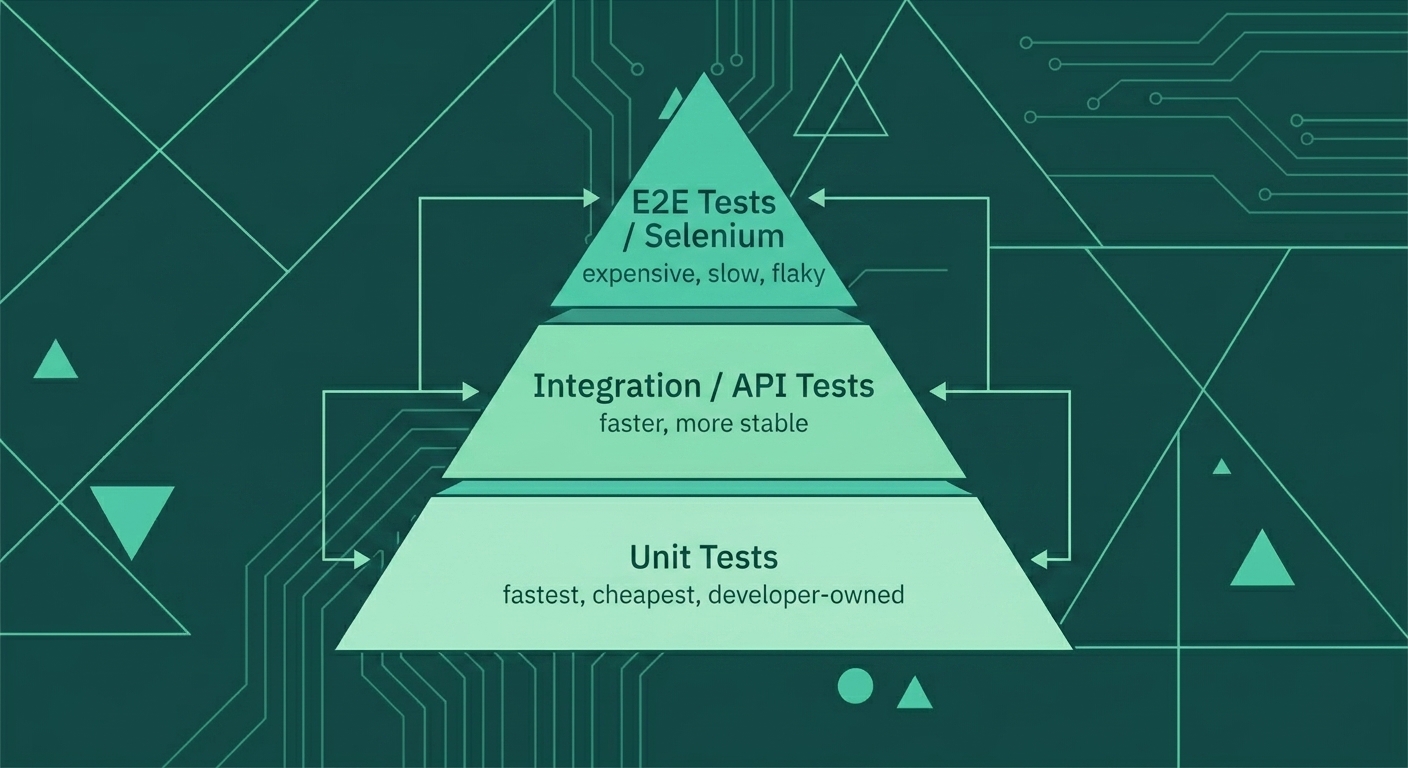
- E2E Tests (Top): Where Selenium lives—expensive, slow, flaky
- Integration/API Tests (Middle): Faster, more stable
- Unit Tests (Bottom): Fastest, cheapest, developer-owned
Where Selenium Actually Fits
Selenium is for end-to-end (E2E) tests—validating that the entire system works together from the user's perspective.
Good use of Selenium:- Critical user journeys (checkout flow, login)
- Cross-browser compatibility
- Visual verification of key pages
- Testing business logic (use unit tests)
- API response validation (use API tests)
- Testing every possible input combination
What to Automate vs. What NOT to Automate
This is where many QA engineers go wrong. Automation has a cost—writing, maintaining, debugging flaky tests. You need ROI thinking.
Automate This
| Scenario | Why |
|---|---|
| Smoke tests | Run on every deploy, catch obvious breaks |
| Critical user journeys | Checkout, login, search—revenue-impacting |
| Regression suite | Things that broke before and must never break again |
| Cross-browser checks | Humans are terrible at repetitive browser switching |
| Data-driven tests | Same flow, 100 different inputs |
Don't Automate This
| Scenario | Why |
|---|---|
| One-time tests | Automation cost > benefit |
| Constantly changing UI | You'll spend more time fixing tests than finding bugs |
| Exploratory testing | Human intuition finds edge cases AI and scripts miss |
| Usability testing | "Does this feel right?" can't be automated |
| Visual design review | Unless using visual AI (covered later) |
A Developer's Honest Take
> "I've spent hours debugging timing issues and fighting StaleElementReferenceException like it was a final boss in a bad video game."
> — Developer on Selenium maintenance
The lesson? Every automated test is code you have to maintain. Be selective.
Risk-Based Thinking for E-Commerce
Not all features are equal. A bug in your checkout flow costs you money. A bug in your "About Us" page costs you... almost nothing.
E-Commerce Risk Matrix
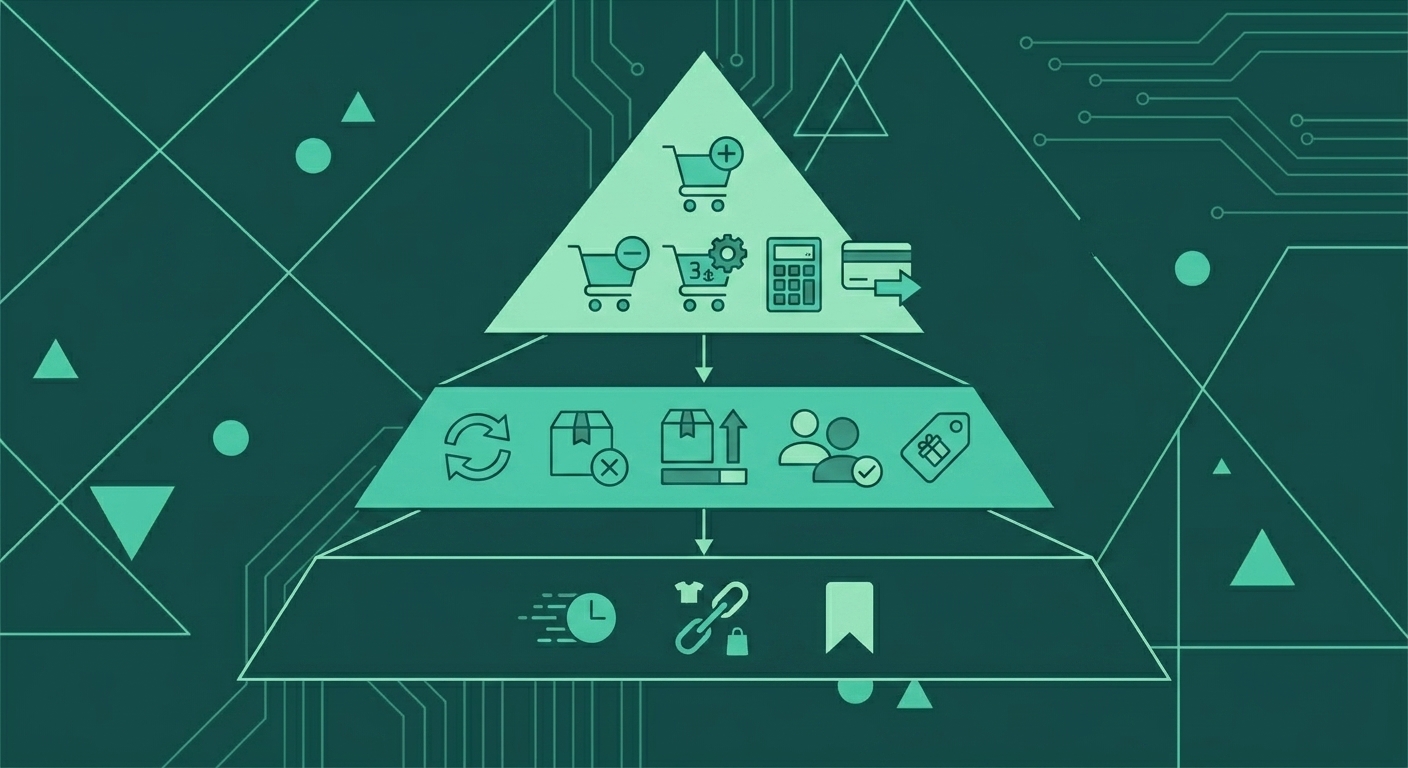 HIGH RISK (Automate heavily): Checkout & payment, cart functionality, user authentication, search & product discovery, inventory/pricing accuracy
MEDIUM RISK (Automate critical paths): Product pages, account management, order history, filters and sorting
LOW RISK (Manual or skip): Static content pages, footer links, social media integrations, marketing banners
HIGH RISK (Automate heavily): Checkout & payment, cart functionality, user authentication, search & product discovery, inventory/pricing accuracy
MEDIUM RISK (Automate critical paths): Product pages, account management, order history, filters and sorting
LOW RISK (Manual or skip): Static content pages, footer links, social media integrations, marketing banners
The "2 AM Test"
Ask yourself: "If this feature breaks at 2 AM, does someone get paged?"
- Checkout breaks at 2 AM? Yes, page someone. Automate this.
- Footer link to privacy policy breaks? No. Don't over-invest.
The Quality Engineer vs. Tester
| Tester | Quality Engineer |
|---|---|
| Executes test cases | Designs test strategy |
| Reports bugs | Prevents bugs |
| Works after development | Works alongside development |
| Owns testing | Coaches everyone on quality |
| Uses tools | Builds tools |
Thinking About E-Commerce Testing
E-commerce has unique challenges:
- Money is involved - Payment bugs are lawsuits waiting to happen
- Inventory is real-time - Race conditions matter
- Users are impatient - Performance is a feature
- Trust is everything - Security bugs destroy brands
Throughout this course, we'll test a realistic e-commerce application with:
- Product catalog with search and filters
- Shopping cart with quantity management
- Multi-step checkout
- Payment integration
- Order confirmation
Key Takeaways
- Think ROI - Every test has a cost. Automate what matters.
- Respect the pyramid - E2E tests are expensive. Use them wisely.
- Risk-based prioritization - Checkout > About page. Always.
- Prevent, don't just detect - Shift left, work with developers.
- Maintenance is real - The test you write today, you'll debug tomorrow.
Reflection Questions
Before moving on, honestly answer:
- Does your current test suite follow the testing pyramid, or is it inverted?
- How much time do you spend maintaining tests vs. finding real bugs?
- Are your automated tests catching bugs, or just creating noise?
Next Lesson
Next, we'll tackle the Misconceptions & Path Forward—the uncomfortable truths about Selenium, AI, and what actually works in 2025.