Introduction to DSA
Welcome to DSA Fundamentals! In this course, you'll learn the building blocks of efficient programming through visual learning.
What is a Data Structure?
A data structure is a way to store and organize data in a computer so that it can be used efficiently. Different data structures are designed for different kinds of operations.
Think of it like organizing your closet - you could throw everything in randomly, or you could organize by type, color, or frequency of use. The right organization makes finding things much faster!
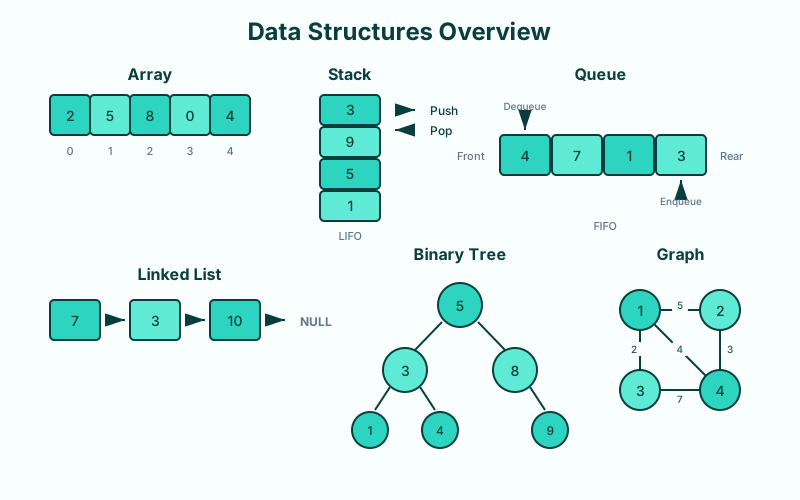
Common Data Structures
Here's a quick overview of the data structures we'll cover:
| Data Structure | Description | Use Case |
|---|---|---|
| Array | Sequential collection with indices | Fast access by index |
| Stack | LIFO (Last In, First Out) | Undo operations, backtracking |
| Queue | FIFO (First In, First Out) | Task scheduling, BFS |
| Linked List | Nodes connected by pointers | Dynamic size, frequent insertions |
| Tree | Hierarchical structure | File systems, databases |
| Graph | Vertices connected by edges | Social networks, maps |
What is an Algorithm?
An algorithm is a step-by-step procedure to solve a specific problem. It's like a recipe that defines the exact steps in a particular order.
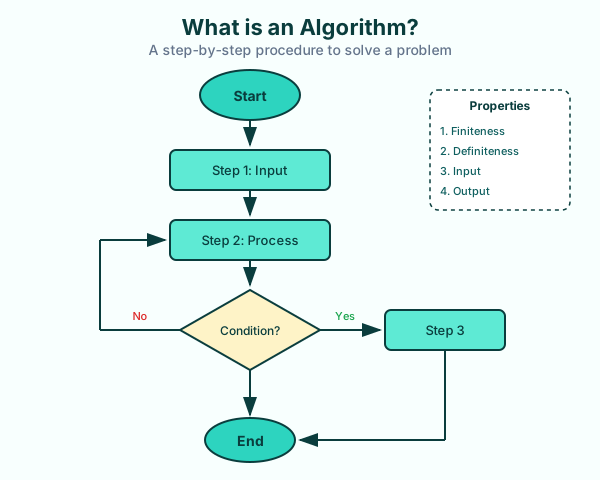
Properties of Algorithms
Every valid algorithm must have these properties:
- Finiteness - Must terminate after a finite number of steps
- Definiteness - Each step must be precisely defined and unambiguous
- Input - Takes zero or more inputs
- Output - Produces at least one output
- Effectiveness - Each step must be basic enough to be carried out
Why Learn DSA?
- Efficient Problem Solving - Choose the right tool for the job
- Better Code - Write faster, more memory-efficient programs
- Coding Interviews - Essential for tech company interviews
- Foundation - Building blocks for advanced topics like AI and databases
What's Next?
In the next lesson, we'll dive deeper into why DSA matters and explore the difference between linear and non-linear data structures.